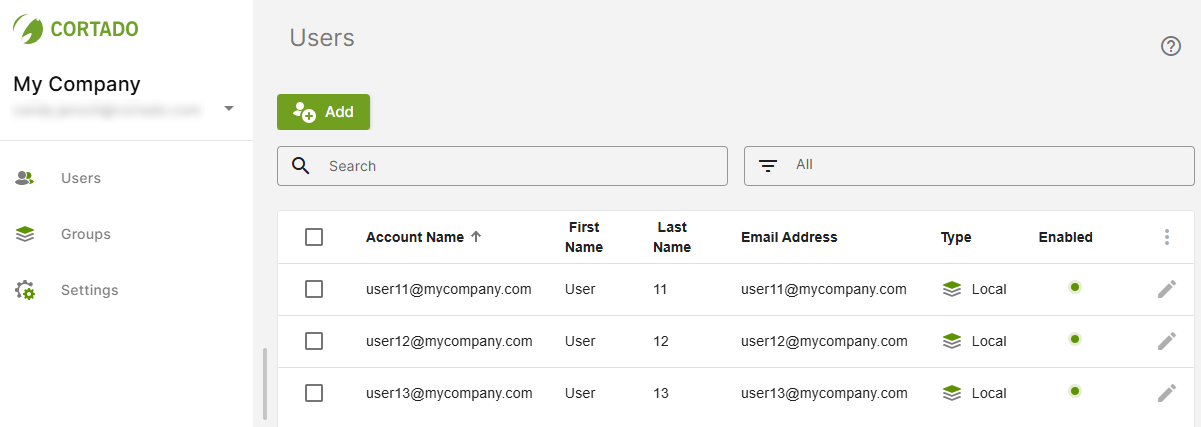
This feature is already available in our new administration portal. The new portal is currently in beta. Instructions for using the new portal can be found at the end of this article.
Add the users whose mobile devices you want to manage with Cortado MDM.
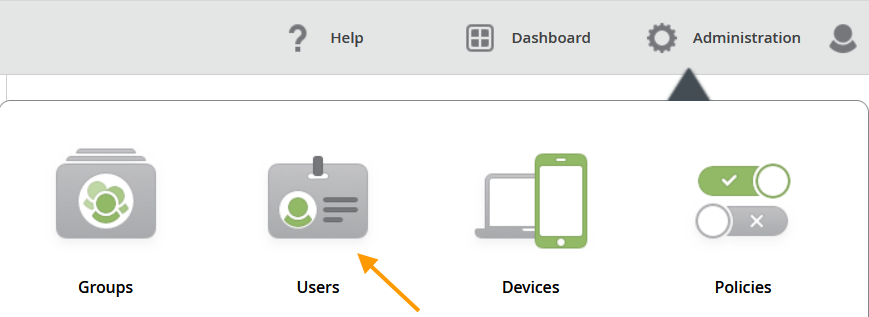
- To do so, select Administration→ Users in the Administration Portal (arrow in illus.).
- Then click on the Plus button above left in the display (arrow in illus.).

Here you will chose the source from which the users should be imported:
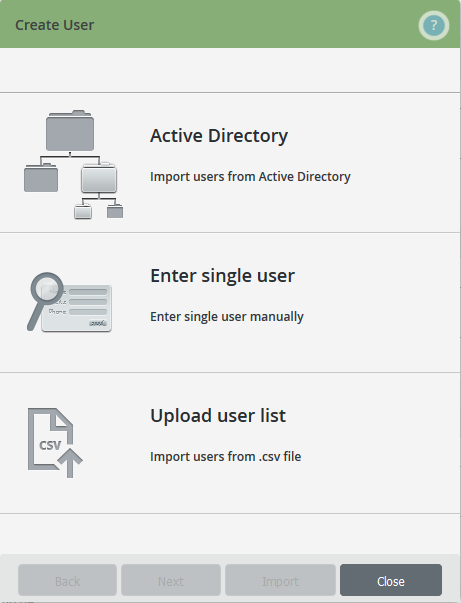
Adding users from the Active Directory
Import local users from .csv file
Adding users from the Windows Server Active Directory
Note! If you want to add users from Microsoft Entra ID (formerly Azure Active Directory), use the corresponding features in group management (see Import groups from Microsoft Entra ID help article).
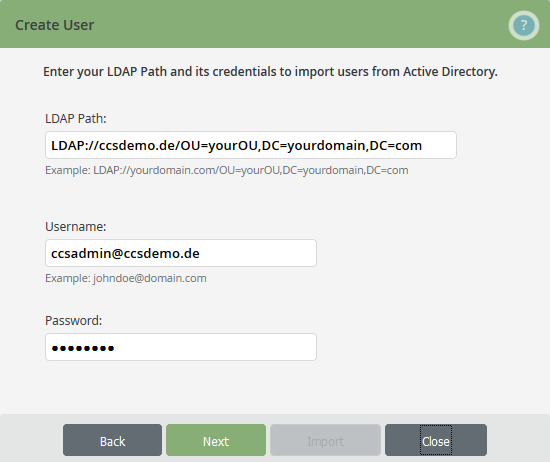
If you have selected Active Directory as the import source, another window opens, in which you can enter the LDAP path, where the desired users will be found.
- Also enter the email address and password of the administrator account with which you access your AD.
- Then click on Next.
- Now the users to be imported are displayed.
- Then click on Import.
Note! Following import, the users will automatically receive a welcome email that will allow them to log in My Cortado and set a password. Amongst other uses, this password will be required for embedding ADE devices (Apple) or zero-touch devices (Android). In this case, the users will use the password to authenticate themselves. Additionally, the users can configure their own mobile devices in My Cortado.
Enter single local users
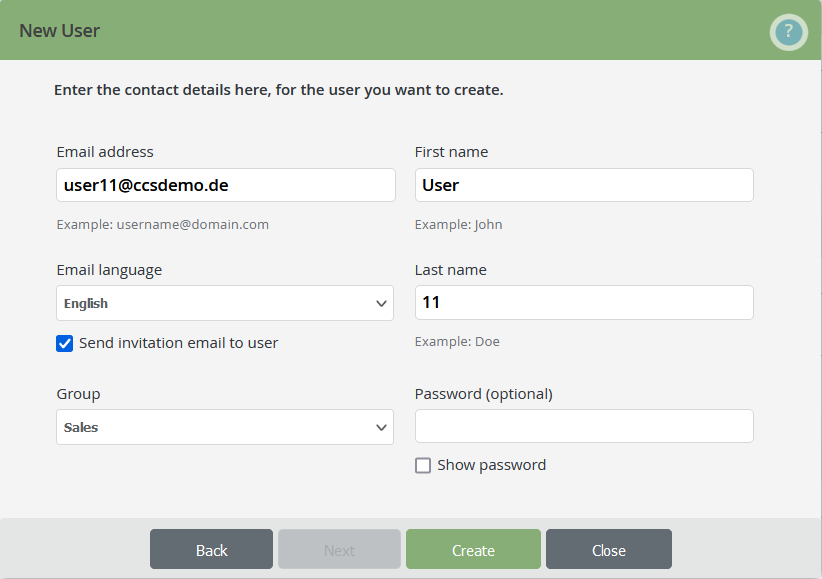
If you selected Enter single user, you can now add users individually.
- Enter the email address, the first name and surname
- Select the group that you created in the previous step.
- E-mail language: Select the language in which the e-mails are to be sent to the users.
- Send invitation e-mail to user: Deactivate this checkbox if you don’t want the users to receive a Cortado MDM generated welcome email. You can still send the Cortado MDM welcome email later.
- Optional password: Setting a password for the users is optional and is not necessary if you send the users the welcome email. They can use the welcome email to log themselves in and set their own passwords. If you enter an initial password here, the users can log in directly to My Cortado or set up a ADE or zero-touch device.
- Then click on Create.
Note! The e-mail address used when creating users can no longer be changed, as it is set as the user name for the device login and is therefore binding. If an adjustment is required, for example due to a change of email address or a typing error, the device must be removed, the user deleted and then recreated.
Import local users from .csv file
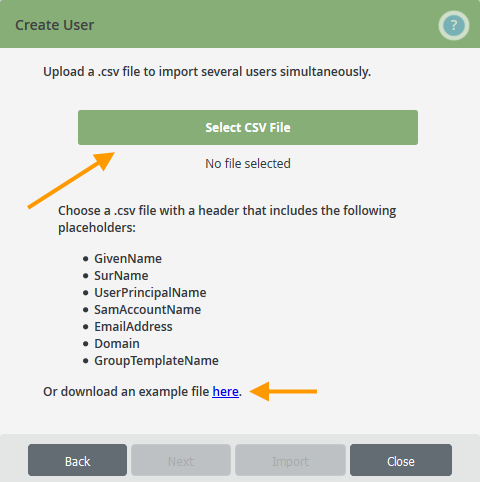
If you have selected Upload user list as your import source, you can import the local users into the Administration Portal using a .csv file. You will need an appropriately prepared file.
- Download this file (lower arrow in illus.) and complete the data as required.
- Then click on Select CSV File (upper arrow in illus.) and upload the prepared file.
You will then find the imported users in the left column under Users.
Note! Always enter a functioning email address in the .csv file. This email address will automatically receive a welcome email that will allow the user to log in to My Cortado and set a password. This password is required for the integration of ADE devices (Apple) or zero-touch devices (Android). Here the user has to authenticate himself with this password. Additionally, the users can configure their own mobile devices in My Cortado .
NEW ADMINISTRATION PORTAL: Adding local users
The new administration portal is currently in the beta phase. You are welcome to send us your feedback on the new portal using the corresponding button (at the bottom left of the new administration portal).
- Click in the user management (upper arrow in illus.on the Add button (lower arrow in illus.).
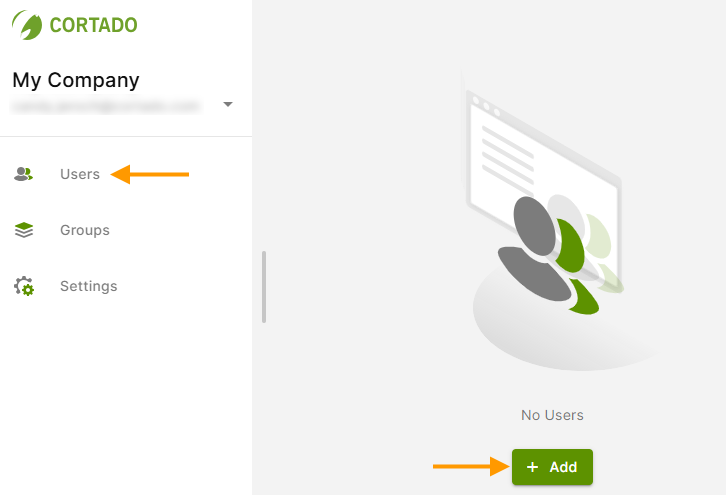
Now decide whether you want to add a single user or multiple users (.csv file):
Import local users with the help of .csv files
Add single local users
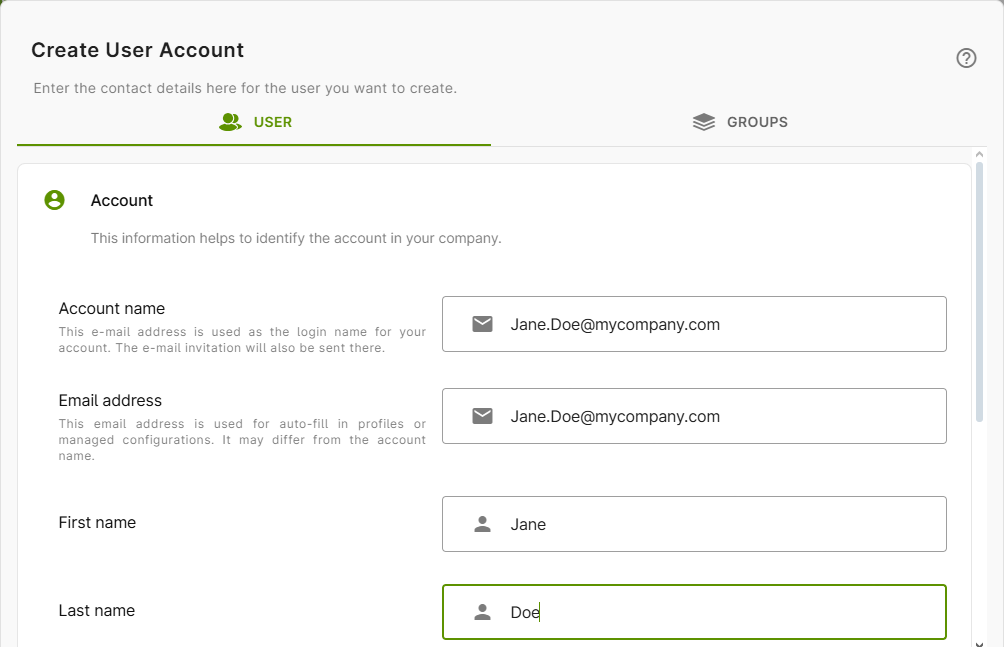
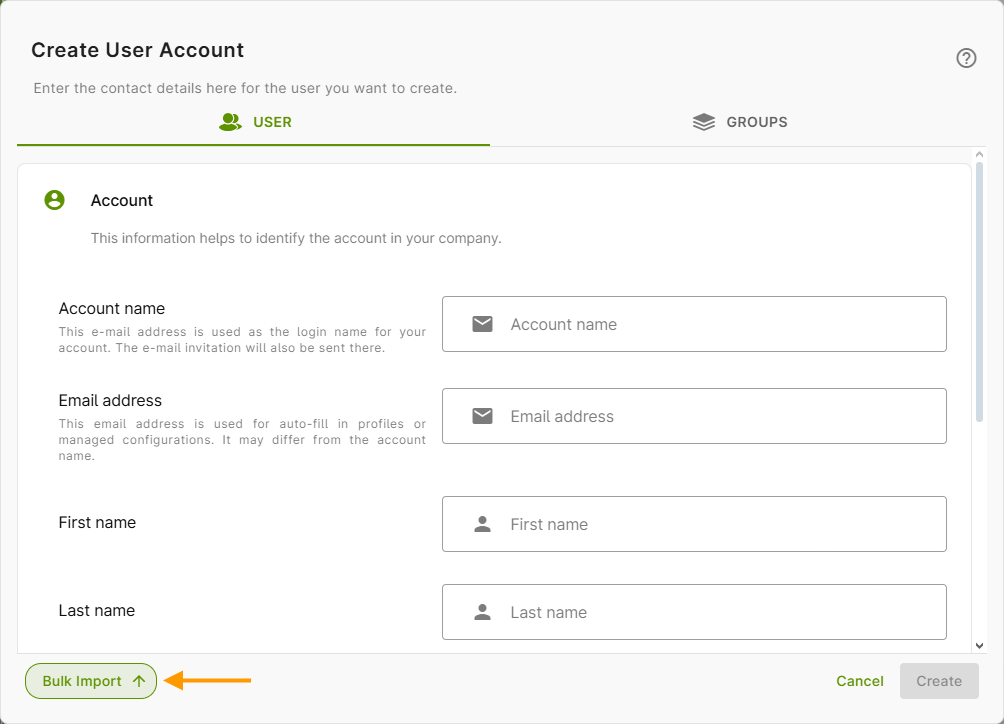
The following information is required to create a user account:
- Account name: Enter the user's e-mail address. The account name is the login name and cannot be changed later. Users need it to log in to My Cortado and the Cortado app on mobile devices, among other things. The email invitation will also be sent to this address.
- E-mail address: You can enter a different e-mail address here. It is used for filling in profiles or managed configurations. This email address may differ from the account name.
- First name and last name: Enter the first name and surname of the user here.
Note! If the account name needs to be changed, for example due to a change of email address or a typing error, the device must be removed, the user deleted and then recreated.
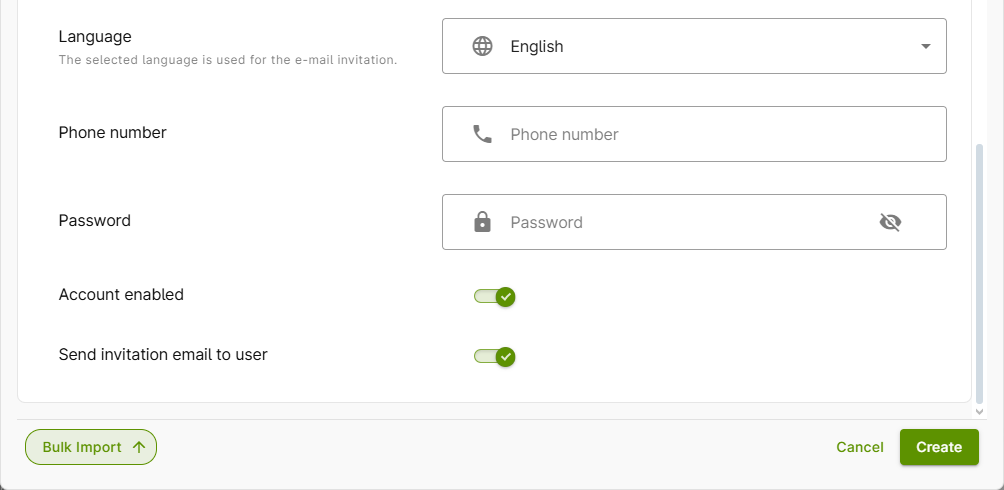
- Language: Specify the language in which the emails are to be sent to the user.
- Phone number: A phone number can optionally be entered here.
- Password: Setting a password for the users is optional and not necessary if you send them the invitation email. With the help of the invitation email, users can register themselves and set their own password. If you enter an initial password here, users can use it to log in directly to My Cortado or set up an ADE device or a zero-touch device (Android).
- Account activated: Here you can activate/deactivate the account. As soon as an account has been deactivated, the user no longer has access to the workspace of their device, to My Cortado and the Cortado app.
- Send email invitation to user: Deactivate this checkbox if you do not want users to receive an email invitation generated by Cortado MDM. The email invitation can be sent separately later.
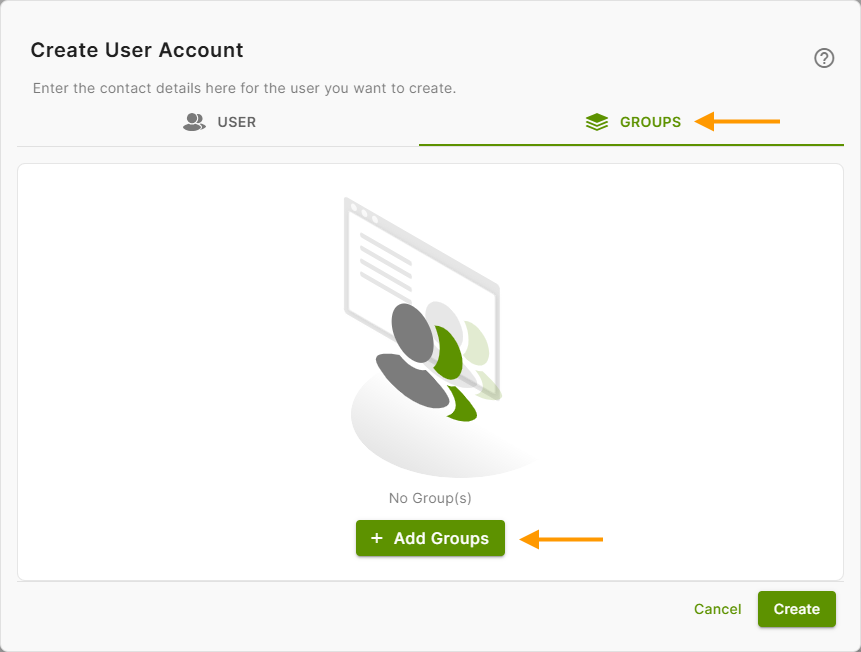
- Now switch to the Groups tab (upper arrow in illus.) if you want to assign one (or more) group(s) to the user at this point (lower arrow in illus.). (You can also do this later.)
- Then click on Add groups (lower arrow in illus.).
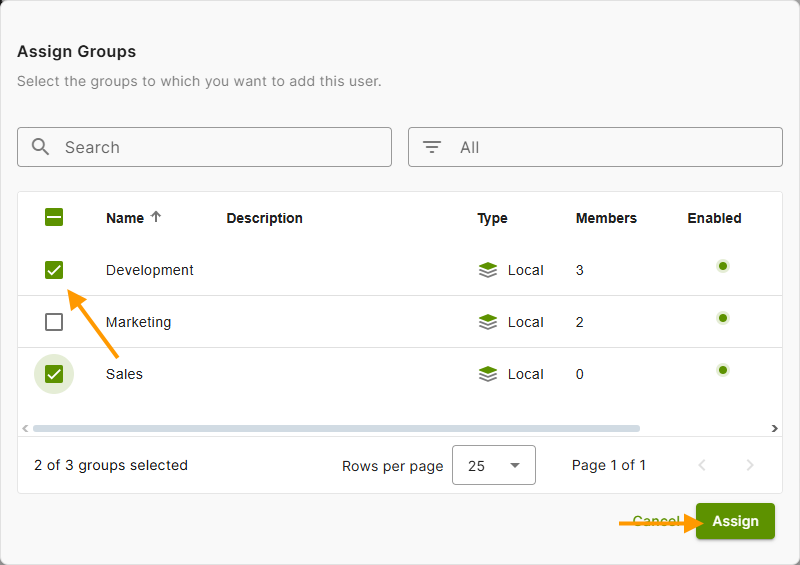
- Select the desired group(s) (upper arrow in illus.) and then click on Assign (lower arrow in illus.).
- Then click on Create.
Import local users with the help of .csv files
- After clicking on Add button, select the Bulk import button (arrow in illus.).
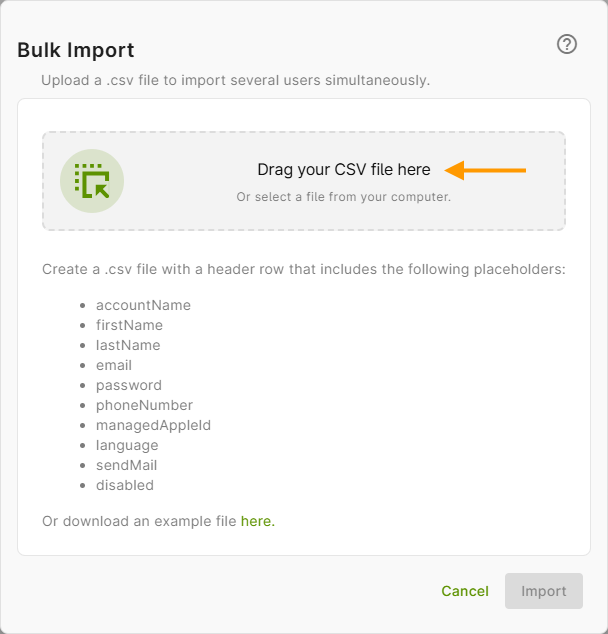
- Create a CSV file that contains the placeholders listed in the next screen (comma-separated) in the first line and add the corresponding user data (see example file).
- Enter at least the placeholders email, firstName and lastName. If you do not specify a different account name (accountName) , the email is automatically used for the account name instead. (For detailed information on the difference between account name and email, see above.)
- language: Use the values de and en. Depending on whether German (de) or English (en) is to be used as the language for the e-mail invitation.
- sendMail: Use the value true if you want to send an invitation email to all users in the list during the import. If you do not want to send an email invitation during the import, simply leave out the placeholder sendMail. You can also send the email invitation later.
- disabled: If you want your user accounts to be activated automatically after the import, use the placeholder disabled and enter the value false in your CSV file. If you omit the value, the user account is not activated after the import.
- Drag and drop your CSV file to the corresponding location in the administration portal (arrow in illus.) or select the file on your computer.
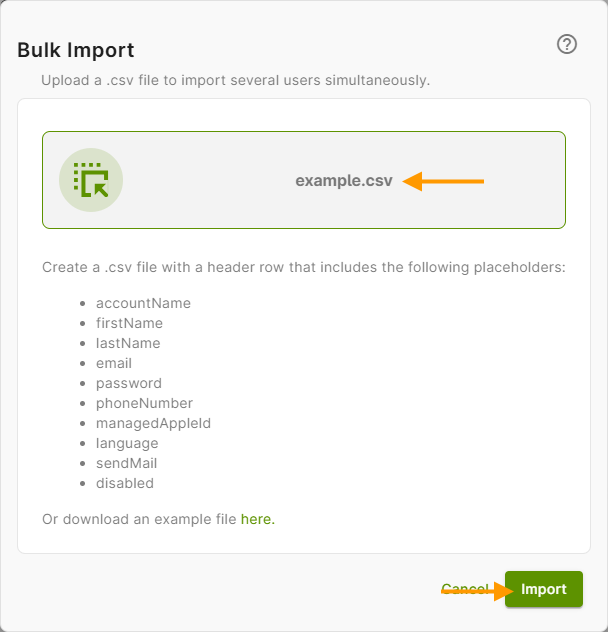
- Then click on Import (lower arrow in illus).
- Close the next window after the successful import.
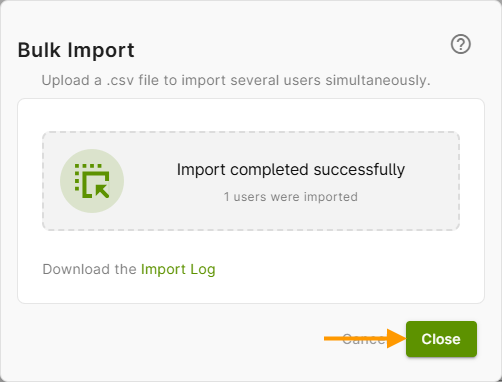
You will now find the imported users in the user administration.